Your Guide to Crawl Space Wood Rot Repair for St. Louis Homes
Published July 2, 2026 · By Jason Ellis, Wood Rot Experts
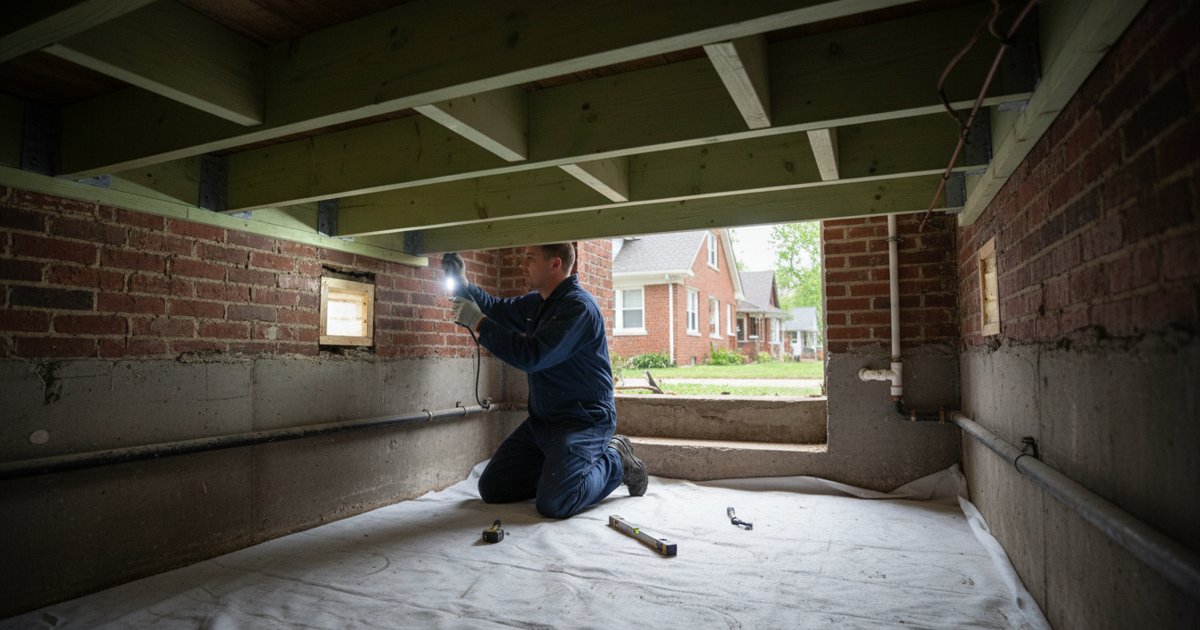
Crawl space wood rot repair involves identifying the moisture source, removing damaged joists and beams, treating the area with a borate solution, and replacing structural members with pressure-treated lumber.
| Spec | Detail |
| Critical Moisture Level | Wood moisture content above 20% |
| Primary Fungi Type | Poria incrassata (Brown Rot) |
| Standard Repair Material | Pressure-treated dimensional lumber (2x8, 2x10) |
| Preventative Treatment | Borate solution application |
Why Crawl Space Rot is a Hidden Threat to St. Louis Homes
Beneath the beautiful floors of many St. Louis homes, from the historic brick homes of Lafayette Square to modern constructions, lies a dark, damp space that can harbor a serious threat: wood rot. In our years serving the area, our technicians have seen firsthand how the combination of St. Louis's notorious humidity and clay-heavy soil creates a perfect environment for fungal growth in crawl spaces. This isn't just a surface-level issue. The wood in your crawl space—the floor joists, rim joists, and support beams—is the literal foundation of your home's structure. When it begins to decay, the integrity of the entire house is at risk.
The problem begins with moisture. Water can enter a crawl space from plumbing leaks, poor exterior drainage, or simply by wicking up from the damp ground. Once the moisture content of the wood exceeds 20%, fungi can activate and begin to feed on the cellulose, breaking down the wood's structural fibers. This can lead to sagging floors, sticking doors, and eventually, a catastrophic failure of the floor system. We often find that the original builders used untreated lumber, which is highly susceptible. The modern standard for this application is properly rated pressure-treated lumber, which is infused with preservatives to resist this exact type of decay.
Identifying Wood Rot in Your Crawl Space: A Hands-On Guide
Discovering rot early is key to minimizing damage. While our team uses specialized tools like moisture meters and borescopes, any homeowner can perform a basic inspection. The first sign is often a musty, earthy smell inside the home, particularly on the first floor. If you can safely access your crawl space, take a powerful flashlight and a long-handled screwdriver. Look for discolored wood that appears darker than the surrounding lumber, or wood that has a cracked, cubical pattern (a classic sign of brown rot). You may also see fine, root-like fungal strands called mycelium spreading across the wood or soil.
The most reliable test is physical. Firmly press the tip of the screwdriver into any suspect joists or beams. Healthy wood will be solid and resist the pressure. If the screwdriver sinks in easily, even just a fraction of an inch, you have found rot. Pay special attention to the sill plate (the wood resting directly on the foundation), the rim joists (the outer frame of the floor system), and the ends of floor joists where they meet the foundation. In some cases where the rot is localized and the wood is dried out, it may be a candidate for stabilization with an epoxy consolidant rather than full replacement, but this determination requires a professional assessment.
The Root Cause: St. Louis Moisture and Your Home's Foundation
Repairing the rotted wood is only half the battle; if the moisture source isn't eliminated, the rot will inevitably return. In St. Louis, the sources are predictable. We often trace crawl space moisture back to issues on the home's exterior. Improperly graded soil that slopes toward the foundation, clogged gutters that overflow, and missing downspout extenders all dump rainwater directly against the foundation wall. Over time, this water finds its way inside. The beautiful, mature trees in neighborhoods like Tower Grove can also contribute, with roots disrupting foundation drainage systems.
Our inspections always start outside the crawl space. We look for gaps in the home's water-shedding systems. Compromised exterior caulking around pipes or vents can create a direct path for water. Inadequate or damaged metal flashing at the base of the walls is another common culprit we find. These small exterior failures can lead to major interior problems, which is why addressing damaged siding and trim is often a critical first step in a permanent crawl space solution. A slow plumbing leak from a bathroom or kitchen above is another frequent cause, delivering a steady supply of water that wood-rotting fungi need to thrive.
The Repair Process: From Damaged Joists to Structural Soundness
When our team undertakes a crawl space repair, safety and structural stability are the top priorities. The first step is always to support the floor system above the work area using temporary steel posts and heavy-duty beams. This ensures the house remains stable while we remove the compromised structural members. Once supported, our technicians carefully cut out and remove all the rotted wood, extending the cuts into sound wood to ensure no fungus remains. This is not a place for shortcuts; leaving even a small amount of infected wood can lead to re-infestation.
With the damaged material gone, we treat the surrounding, intact wood surfaces. We apply a liquid borate solution, a wood preservative that soaks into the wood fibers and provides long-lasting protection against future fungal growth. After the treatment has been absorbed, we begin reconstruction. We custom-cut and install new joists, beams, and sill plates using high-grade, appropriately treated pressure-treated lumber. Every piece is measured and fitted precisely to restore the home's original structural blueprint. This is the heart of comprehensive structural wood rot repair and is essential for the long-term health and safety of your home.
Beyond Replacement: When Epoxy and Consolidants Make Sense
While full replacement with pressure-treated lumber is the most common solution for severe structural rot, it's not always the only option. In some situations, particularly in the historic homes of Webster Groves where preserving original materials is a priority, a restoration approach using epoxies can be effective. This method is typically reserved for non-critical or localized damage where the bulk of the wood member is still sound. The process begins by surgically removing the decayed wood and allowing the remaining solid wood to dry completely, often with the help of fans and dehumidifiers.
Once the wood is verifiably dry, our technicians apply a low-viscosity epoxy consolidant. This liquid soaks into the porous, slightly weakened wood fibers and then cures, hardening them into a solid, stable mass that is stronger than the original wood. After the consolidant has cured, any voids are filled with a structural epoxy putty, which is shaped and sanded to match the original profile of the beam or joist. Though it's in a crawl space, we often recommend a final primed and painted finish over the epoxy repair. This not only provides an additional moisture barrier but also allows for easy visual inspection in the future. This is a similar technique our teams use when restoring historic wood elements on a home's exterior.
Preventing Future Rot: Long-Term Crawl Space Health
A professional repair restores your home's safety, but preventative measures ensure you won't face the same problem again. The goal is to turn your crawl space from a damp, fungus-friendly environment into a dry, stable one. The most effective step is installing a durable vapor barrier across the entire dirt or gravel floor. This thick sheeting, properly sealed at all seams and foundation walls, stops ground moisture from evaporating into the crawl space air.
Controlling exterior water remains paramount. This means keeping gutters clean, ensuring downspouts discharge water well away from the foundation, and maintaining a positive grade. It's also critical to inspect and maintain the home's exterior envelope. Our technicians often find that gaps in exterior flashing or deteriorating caulking around the foundation are the primary entry points for water. Sealing these entry points is a simple action that provides significant protection. For crawl spaces with persistent humidity issues, a dedicated crawl space dehumidifier can be installed to keep the ambient moisture level low, creating an environment where wood rot simply cannot grow.